Shinelight: A Handwritten Font That Feels Like a First Draft—But Polished
I opened a fresh brand board for a new client—a small ceramic studio in Portland—and dropped in their name. Just text. No logo yet, no color palette, no mood board. I needed to feel the voice before building anything around it. That’s when I reached for Shinelight.
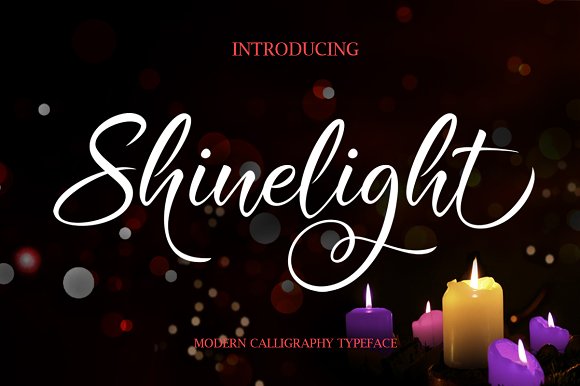
It’s a handwritten, modern calligraphy font—but not the kind that looks like it was scribbled hastily between coffee refills. Shinelight has smooth, confident lines. Its characters weld together naturally, almost like ink flowing across paper without lifting the pen. There’s rhythm in the connections, warmth in the curves, and just enough structure to keep it legible—even at smaller sizes on packaging or social thumbnails.
We used Shinelight as the primary display typeface for the studio’s visual identity. Not as filler, not as decoration—but as the first impression. It appeared in the logo lockup (paired with a quiet, slightly condensed serif for contrast), on handmade product labels, in Instagram story headers, and even laser-etched onto the back of ceramic coasters. Every time, it held its own—not shouting, but leaning in.
Here’s what stood out during real use:
- It reads beautifully at scale: At 48pt on a shop sign? Elegant. At 14pt on a matte sticker? Still clear, still graceful. The letterforms are open, the spacing generous, and the terminals gently tapered—not too sharp, not too soft.
- It doesn’t compete—it complements: As a script font, Shinelight works best as a headline or accent font. We never tried it for body copy (and wouldn’t recommend it). But paired with a warm, humanist sans serif—think something like Poppins Light or Work Sans—it created instant balance: energy + calm, craft + clarity.
- The welding effect is real—and useful: Unlike some script fonts where joins feel forced or inconsistent, Shinelight’s connections flow. That means fewer manual tweaks in Illustrator. Fewer broken ligatures. More time spent refining color or composition instead of kerning every ‘f’ and ‘l’.
For the ceramic studio’s packaging, we printed Shinelight directly on uncoated kraft boxes. No foil, no embossing—just crisp black ink. It looked intentional, tactile, quietly confident. On their website hero section, we set it large and centered over a soft photo of raw clay—no animation, no gradient. Just type, space, and presence. Visitors paused. Clients noticed. That’s the power of a well-chosen script font: it doesn’t need bells to be memorable.
Shinelight lives in the Script Amp category—not because it’s loud, but because it amplifies intention. It’s not a “fun” font or a “vintage” font or a “wedding” font by default. It’s a human font. And in branding today—where so much feels algorithmically smoothed or overly templated—that matters.
We tested it across formats before locking it in: business cards (it held up beautifully on thick cotton stock), Instagram posts (legible even with subtle texture overlays), email headers (clean in dark mode), and printed posters (no hint of pixelation at 300dpi). One thing we appreciated: the OTF files include standard ligatures and stylistic alternates—enough variety to avoid repetition in longer phrases, but not so many options that it slowed down the workflow.
It’s also a commercial font with full licensing for client work, including merchandise and digital templates. No surprises there—just straightforward permissions, which is exactly what you want mid-project when you’re juggling deadlines and approvals.
That said, Shinelight isn’t for every project. If your client’s brand is tech-forward, minimalist, or highly functional (think medical devices or SaaS dashboards), this isn’t the go-to. But for creative studios, local eateries, artisanal skincare lines, independent bookshops, or handmade goods—the kind of brands built on care, craft, and personal connection—Shinelight lands with sincerity.
One practical tip: test it early with real words—not just “The quick brown fox.” Try the client’s actual business name, tagline, and a short value statement. Watch how letters like ‘a’, ‘g’, ‘y’, and ‘s’ behave. See if the rhythm feels right when read aloud. With Shinelight, the lowercase ‘e’ has a gentle upward flick, and the ‘t’ ends with a soft curve—not a hard stop. Those details shape tone more than you’d expect.
We also experimented with pairing it against different type families:
- A light, airy sans serif (like Inter Light) for web and app interfaces—clean contrast without coldness.
- A textured serif (like Playfair Display Italic) for editorial layouts—adding gravitas to quotes or studio bios.
- A second, simpler handwritten font (not another script) for secondary accents—like date stamps on event flyers or ingredient lists on product cards.
No pairing felt forced. Each combination kept the focus on meaning—not just aesthetics. That’s rare in script fonts, especially ones with this level of personality.
What surprised me most wasn’t how beautiful Shinelight looked—but how consistent it felt across touchpoints. From a tiny sticker on a soap bar to a 4ft banner in the studio window, the voice stayed cohesive. Not identical, not rigid—but recognizably the same hand, the same intent. That kind of continuity is gold in brand identity work—especially for small businesses who rely on recognition over reach.
If you’re choosing a script font for a real project, ask yourself: Does it support the story—or does it demand attention for its own sake? Shinelight supports. It listens. It bends just enough to fit the context, then holds its shape with quiet confidence.
It’s not flashy. It’s not trendy. It’s a premium font that behaves like a trusted collaborator—not a prop. And in a world full of visual noise, that kind of reliability is the most modern typography trait of all.