Pars: A Handwritten Font That Feels Like a Sigh of Relief
It was 3 p.m. on a Tuesday—coffee lukewarm, tabs open across three browsers—and I was reworking the cover for a new digital magazine feature on mindful living. The previous font felt tight, overly earnest. Too much structure for a story about soft mornings and unhurried routines. That’s when I opened Pars.
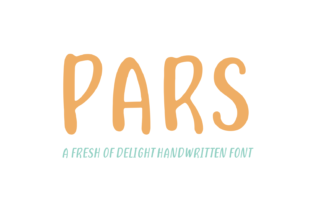
Pars is a fresh, clean handwritten font—no flourishes, no forced drama—just quiet confidence in every curve. It arrives as regular and italic, both cut with gentle rhythm and consistent spacing. There’s no jagged energy here; instead, Pars moves like breath: steady, unhurried, intentionally soft. Its lowercase a and g sit comfortably, its terminals taper without sharpness, and its baseline feels grounded—not floating, not sinking, just present. That soft vibe isn’t accidental. It’s editorial intention made visible.
I used Pars first for the feature title: “How to Hold Space for Yourself.” Set at 48pt on a cream background, it didn’t shout—it invited. Readers paused. Scrolled slower. That’s rare in digital layouts, where attention is measured in milliseconds. Pars doesn’t compete with content; it frames it, like light through linen curtains.
In practice, Pars shines brightest where warmth and humanity matter most: blog headers that welcome rather than announce, ebook covers that signal care over cleverness, newsletter graphics that feel personal—not promotional—and printable planners where handwriting-inspired letterforms echo the tactile joy of pen-on-paper reflection. I’ve used it for chapter openers in a coaching workbook, where each title lands like a gentle reminder—not a command. And in a seasonal recipe ebook, Pars gave ingredient lists and preparation notes a handmade authenticity that matched the stories behind each dish.
It’s not a body text font—and it shouldn’t be. Pars is a script font built for meaning, not mileage. Its strength lies in moments of emphasis: pull quotes that breathe with personality, section headings that guide without commanding, wedding guide titles that whisper elegance instead of shouting luxury, and course PDF covers that communicate approachability before a single word is read. On screen, it renders cleanly at larger sizes—even on mobile—thanks to generous x-height and open counters. In print, it holds character without ink spread or blurring, especially when exported from design tools with proper hinting and embedded outlines.
What makes Pars work so well editorially is its restraint. Unlike many modern script fonts that lean into exaggerated swashes or high-contrast strokes, Pars stays low-key. No alternate glyphs or discretionary ligatures clutter the experience—just two thoughtfully drawn styles that coexist peacefully. That simplicity makes it reliable across formats: whether embedded in a Notion template, exported as a PDF for client handouts, or layered into a Canva newsletter header, it behaves. No surprises. Just calm consistency.
Pairing Pars is intuitive. For long-form reading—like blog posts or digital magazine articles—I set body copy in a warm serif font (think Adobe Garamond or EB Garamond), letting Pars hold the top of the page like a quiet anchor. In a printable planner, I paired it with a clean sans serif (Inter or Manrope) for checkboxes, dates, and instructions—Pars for the reflective prompts (“What made you feel grounded today?”), the sans for functional clarity. For social media graphics, it balances beautifully against minimalist sans serifs or even subtle monospace accents—never fighting for attention, always enhancing tone.
As a Script Amp font, Pars fits seamlessly into editorial workflows that value craft over clutter. It’s a premium font in spirit—thoughtfully designed, commercially licensed, and ready for professional use—but never pretentious. You can license it for ebooks, templates, client publications, and digital downloads without hesitation. Before using it in any commercial project, I always check the included file formats (.otf, .woff2), verify multilingual support (it covers Latin-based languages well, including accented characters common in lifestyle and wellness writing), and confirm licensing terms align with distribution plans—especially for editable Canva templates or Notion workbooks sold to creators.
One afternoon, I tested Pars in a real newsletter header—no redesign, no fanfare, just swapping fonts mid-campaign. The open rate didn’t spike. But replies did. Two readers wrote in separately: “That header felt like a friend saying hello,” and “I actually read the whole thing—felt lighter somehow.” That’s not magic. It’s typography doing its quiet, essential work: shaping how words land, how ideas settle, how people feel when they pause long enough to read.
It’s easy to overlook typeface choice as decoration—until you see how deeply it shapes perception. Pars doesn’t ask to be noticed. It asks to be trusted. To be leaned into. Whether you’re designing a wedding guide that honors slowness, a coaching workbook that holds space for growth, or a recipe ebook rooted in presence, Pars offers something increasingly rare: visual language that matches the values behind the words.
Typography isn’t just about legibility. It’s about resonance. And in a world full of urgent fonts and algorithm-optimized aesthetics, Pars reminds us that sometimes, the most powerful design decision is the one that simply says: breathe.