Jeuliteung: A Rough Brush Font That Feels Like a Thoughtful Pause
Last Tuesday, I sat down to redesign the cover of a small-batch recipe ebook — one that gathers seasonal, no-fuss meals for busy people who still want warmth on their plates and in their words. The manuscript was tender and grounded; the photography soft-lit and unhurried. But the existing title font? Too polished. Too quiet. It didn’t breathe with the content — it hovered above it.
That’s when I opened Jeuliteung.
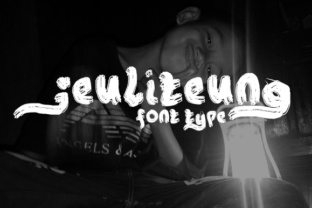
Right away, its character felt familiar — like ink pressed just slightly too hard into handmade paper, or the kind of handwriting you’d find tucked into the margin of a well-loved cookbook: confident but not perfect, rhythmic but never rigid. Jeuliteung is a rough brush script font from Script Amp, designed not to mimic calligraphy, but to echo its honesty — the slight taper of a downstroke, the gentle swell of a curve, the subtle texture where the brush catches and releases the surface. It doesn’t shout. It leans in.
I set the ebook title in Jeuliteung at 48pt, centered over a muted oat-colored background with a single sprig of dried lavender in the corner. Instantly, the cover softened. Not diluted — softened. The font carried weight without heaviness, personality without pretense. It didn’t compete with the imagery or the voice of the writing; it extended it.
This is where Jeuliteung shines most naturally: as a title font that holds space for meaning. It works beautifully in blog headers — especially for lifestyle, wellness, or slow-living blogs — where tone matters as much as information. On a digital magazine feature page, it adds editorial warmth to a headline without sacrificing clarity. In a printable wedding guide, it lends intimacy to section dividers and chapter openers. And in a coaching workbook, it gives hand-drawn exercises a grounded, human rhythm — like the instructor wrote it just for you.
It’s worth noting: Jeuliteung is not built for long paragraphs. Its charm lives in brevity — in titles, pull quotes, short captions, cover text, and decorative accents. Think of it as the first sentence of a conversation: inviting, expressive, setting the mood before the rest unfolds. For body copy, I paired it with a warm serif font — something with generous x-height and gentle contrast — and found the balance effortless. The contrast wasn’t stark; it was complementary, like linen next to wood grain.
In newsletter graphics, Jeuliteung brings quiet distinction. A single line — “This week: three ways to begin again” — set in Jeuliteung over a simple gradient, feels more like an invitation than an announcement. Readers pause. They feel the intention behind the type. That pause is rare in today’s feed-scrolling rhythm — and precious when it arrives.
For printables — planners, reflection sheets, habit trackers — Jeuliteung adds tactile warmth even in digital form. When exported to PDF, it renders cleanly across devices, and prints with lovely texture on uncoated stock. On mobile screens, I kept titles at minimum 32pt with generous letter-spacing — and it held its character without blurring or thinning out. No pixelation, no awkward compression. Just presence.
What makes Jeuliteung especially thoughtful for independent creators is how it supports consistency without repetition. It includes subtle alternates and contextual ligatures — not flashy, but enough to keep repeated words (like “and,” “the,” or “you”) feeling organic rather than robotic. There’s a single weight, intentionally. Not a limitation — a focus. It asks you to use it where it matters most, and trust other fonts to carry the rest.
Before using Jeuliteung in client work, templates, or paid digital downloads, I always check licensing. As a commercial font, it’s cleared for use in ebooks, newsletters, printables, and web projects — including embedded use in PDFs and static social media graphics. It supports Latin-based languages and comes in OpenType format, so it integrates smoothly into design tools like Figma, Adobe Creative Cloud, and Affinity Suite. No surprises. Just clean, ethical typography.
I’ve used Jeuliteung in a few different rhythms lately: as a chapter opener in a course PDF about mindful communication; as the only typographic accent in a minimalist printable planner; and as the sole font in a set of Instagram quote cards for a therapist’s newsletter. Each time, it performed quietly but decisively — never overwhelming, never fading. It doesn’t try to be everything. It simply offers what it does best: a moment of visual calm, a breath before the reading begins.
Typography, at its kindest, is a kind of listening. It hears the tone of the words and answers with shape, weight, and space. Jeuliteung listens closely — and replies with warmth, texture, and quiet confidence. It doesn’t ask to be admired. It asks to be felt — in the way a reader slows down just slightly, or smiles at the familiarity of its curves, or pauses mid-scroll because something about the title feels like it was made just for them.
If your next project carries intention — whether it’s a recipe shared with care, a guide written from experience, or a newsletter sent like a note across the table — Jeuliteung might be the quiet voice your words have been waiting for.