Chesan: A Playful Yet Legible Handwritten Font for Real Branding
It was one of those Monday mornings—coffee brewed, brand board open in Figma, and a new client brief waiting: a small neighborhood ceramics studio launching their first collection of hand-thrown mugs and planters. They wanted warmth, approachability, and just a whisper of whimsy—not cutesy, not corporate, but human. That’s when I dropped Chesan into the logo mockup.
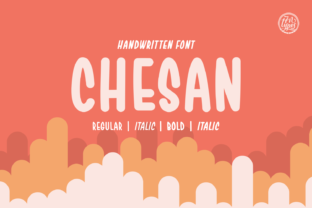
Right away, it felt like a breath of fresh air. Chesan is a handwritten font with a cartoonesque charm—think rounded terminals, bouncy rhythm, and confident, bold strokes. It doesn’t whisper; it smiles. But here’s what surprised me most during that first test: how legible it stayed, even at small sizes. Those thick, consistent lines give it presence without sacrificing clarity—a rare balance in the script font world.
I used Chesan as the primary logo typeface, setting the studio’s name in all caps with subtle letter-spacing. No extra effects, no shadows—just clean white-on-terracotta. On screen, it held up beautifully in the hero section of their homepage. In print, it looked equally strong on a matte-finish business card and a kraft paper product label. That versatility? It’s not accidental. Chesan is built to be a display font first—but unlike many playful scripts, it doesn’t crumble when asked to do more than headline duty.
For packaging design, I tested Chesan on a 2” x 3” sticker for mug bottoms. At 14pt, it remained readable without strain—thanks to its generous x-height and open counters. The bold weight gives it authority, while the slight irregularity in stroke width keeps it feeling handmade, not mechanical. That duality makes Chesan ideal for brands rooted in craft: pottery studios, indie bakeries, natural skincare labels, or local bookshops where personality matters as much as professionalism.
Of course, I didn’t throw Chesan into every layer of the identity. Script fonts shine brightest when they anchor meaning—not clutter it. So I paired it thoughtfully: a warm, neutral sans serif (like Poppins or Inter) for body copy, navigation, and product descriptions. That contrast worked like a quiet conversation—Chesan introduces the voice; the sans serif carries the message. For editorial design—like a seasonal newsletter or workshop flyer—I reserved Chesan for headlines and section dividers, letting the supporting type handle paragraphs and captions with ease.
One thing I always check before committing to any script font is its range of styles and alternates. Chesan comes with standard OpenType features—basic ligatures and stylistic alternates—which helped me fine-tune rhythm in longer words. No heavy multilingual support, so I kept it to English-language applications (perfect for this client’s U.S.-based audience). File formats include WOFF2 and OTF, making it easy to use across web and print workflows. And yes—it’s a commercial font licensed through Script Amp, so I confirmed usage rights covered both digital assets and physical merchandise before sending the final brand guide.
What really sold me wasn’t just how Chesan looked—but how it behaved in context. On an Instagram post announcing their pop-up event, it popped against a soft-focus photo of clay textures. On a simple A5 flyer taped to a café window downtown, it drew eyes without shouting. Even scaled down for a favicon preview (yes, I tested that), the core shape remained recognizable—a sign of strong letterform design.
That said, Chesan isn’t meant for long-form reading. Don’t set your website’s blog posts or product ingredient lists in it. It’s not a workhorse—it’s a storyteller. Use it where you want tone, warmth, and intention to lead: logos, signage, social headers, packaging accents, greeting cards, or limited-edition labels. Think of it like a well-placed accent color—not the whole palette.
Before locking in the full system, I ran three quick tests: printing a sample label on actual sticker stock, viewing the homepage on an older iPad, and asking two non-designer friends what emotion the logo evoked. (“Friendly,” “handmade,” and “I’d trust them with my favorite mug” were all real replies.) That kind of grounded testing matters more than any spec sheet.
If you’re weighing Chesan for your next project, ask yourself: does this brand need to feel joyful but grounded? Does it speak to people who value authenticity over polish? Is legibility at medium sizes non-negotiable—even when the vibe is playful? If yes, Chesan earns its place. It’s not just another cute handwritten font. It’s a confident, clear, and quietly versatile tool—one that reminds us that good typography doesn’t have to choose between fun and function.
And honestly? That’s exactly the kind of font I reach for when the brief says “make it feel like home.”