Brillyo: A Modern Handwritten Font for Digital Branding
As a UI designer who ships dozens of landing pages, SaaS dashboards, and e-commerce experiences each year, I treat typography like interface logic — it’s not decorative; it’s functional. That’s why Brillyo stands out in my font library: it’s a modern handwritten calligraphy font built for clarity, rhythm, and brand resonance — not just aesthetic flair. Unlike many script fonts that sacrifice legibility for flourish, Brillyo balances organic flow with digital readability, making it ideal for real-world web use, not just mockups.
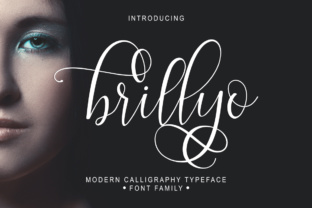
Visually, Brillyo feels warm and intentional — slightly tapered strokes, subtle contrast between thick and thin lines, and natural entry/exit terminals that mimic confident penmanship. It’s not overly ornate or retro; it’s contemporary, human, and quietly confident. That personality translates directly to how users perceive your site: a boutique skincare brand using Brillyo in its hero headline signals craftsmanship and care. A coaching platform applying it to section headers conveys approachability without losing authority. Even on small screens, its open counters and generous x-height keep it scannable — especially when sized 28px and up for headings.
Where Brillyo shines most is in visual hierarchy and conversion-focused layouts. Use it for hero titles, CTA buttons (with ample padding), testimonial quotes, or product name tags in online stores. Its rhythm guides the eye naturally — left to right, top to bottom — reinforcing content flow instead of interrupting it. On a course sales page, pairing Brillyo with a clean sans serif like Inter or Manrope creates immediate contrast: the script sets tone and emotion; the sans handles information density and trust. That dynamic supports both emotional connection and cognitive ease — two pillars of high-converting digital experiences.
For responsive design, Brillyo performs reliably across breakpoints. On mobile, I apply it sparingly: hero headlines only, never body text or navigation labels. Its letterforms hold shape well at 32px on iOS and Android, especially with font-display: swap loading. On dark backgrounds, I add a subtle 1px white text shadow for contrast. Over imagery, I always pair it with a soft background overlay (40% black at 12px line-height) — never drop shadows alone, which muddy its delicate strokes. And for accessibility, I avoid using Brillyo below 24px for any interactive element, and never for form labels or error messages.
Brillyo belongs in the Script Amp category — meaning it’s engineered as a display font, not a workhorse. That’s intentional. It excels in short, high-impact phrases: “Join the Studio”, “Your First Lesson Awaits”, “Hand-Poured • Small Batch”. It’s not meant for paragraphs, pricing tables, or dashboard metrics — and trying to force it there weakens both the font and your message. Instead, use it where tone matters most: logo lockups (as secondary wordmark text), email subject lines in branded campaigns, social media story highlights, or animated SVG text in hero sections. In a creative portfolio, Brillyo adds signature-level distinction to project titles without competing with the work itself.
Font pairing is where Brillyo reveals its versatility. With sans serifs, it pairs best with neutral, geometric options — think Inter, IBM Plex Sans, or Work Sans — for clean contrast and modern balance. With serifs, try Playfair Display (for editorial depth) or Lora (for softer harmony). Avoid other scripts or highly decorative fonts — they create visual noise. For UI components like buttons or badges, keep Brillyo at 16–18px with tight letter-spacing (–0.02em) and bold weight if available. Always test spacing in context: what looks balanced in Figma may tighten or loosen in Chrome due to rendering differences.
Technically, Brillyo ships as a premium font with web-optimized WOFF2 files, multiple OpenType features (including stylistic alternates and ligatures), and support for Latin-based languages. It includes at least one weight — typically Regular — optimized for screen use, with optional Bold or Italic variants depending on the license tier. Multilingual support covers Western and Central European characters, making it viable for EU-facing SaaS products or bilingual blogs. Always verify file formats before purchase: ensure you’re getting CSS-ready kits, not just desktop OTF files.
Licensing is non-negotiable. Brillyo is a commercial font, and its license must explicitly cover web embedding — including usage on client sites, online stores, SaaS platforms, and digital templates you sell. Most Script Amp licenses include unlimited domains for a single site or agency license for multiple clients. Never assume “personal use” covers a freelance project or Shopify store. When building reusable design systems or brand kits, confirm whether the license permits redistribution — many do not, and violating terms risks legal exposure and broken assets down the line.
In practice, here’s how Brillyo elevates real projects: A wedding planner uses it for “Our Story” headers and invitation preview cards — elegant but not cliché. A no-code tool startup applies it to feature headlines in their homepage carousel (“Drag • Drop • Launch”) — adding humanity to technical messaging. A ceramicist’s online shop sets product names in Brillyo over muted photography, then switches to Roboto for descriptions — creating tactile contrast that mirrors her studio process. Each use reinforces identity while serving function.
Typography isn’t about trend-chasing. It’s about choosing tools that align with how people read, scan, and trust digital interfaces. Brillyo delivers that alignment — not as a novelty, but as a considered typeface that supports voice, structure, and intent. When your brand needs warmth without vagueness, distinction without distraction, and humanity without informality, Brillyo earns its place in the stack — not as decoration, but as design infrastructure.