Reprineato: A Handwritten Typeface That Speaks with Clarity
It was a quiet Tuesday afternoon—coffee cooling beside my laptop, the latest issue of a digital lifestyle magazine open in InDesign—and I was wrestling with a cover title. The draft used a delicate, airy script that looked lovely at first glance but dissolved into visual noise at smaller sizes and lost its warmth on mobile previews. I needed something bolder, more grounded, yet still unmistakably human. That’s when I opened Reprineato.
A Typeface That Balances Personality and Legibility
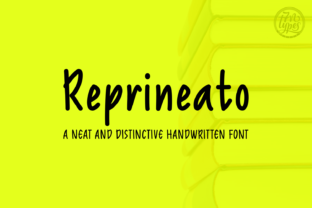
Reprineato is a premium handwritten typeface by Situjuh Nazara, designed not as a decorative flourish but as a functional display font with expressive intent. Its letters carry weight—not heavy or aggressive, but confident and intentional. There’s rhythm in the downstrokes, openness in the counters, and just enough variation to feel hand-drawn without sacrificing readability. Unlike many script fonts that blur into abstraction at 24pt or below, Reprineato holds its shape cleanly across screens, PDFs, and print layouts. It reads like a thoughtful signature: personal, but never private.
Where It Finds Its Editorial Voice
I tested Reprineato across several real content projects: a seasonal recipe ebook, a coaching workbook for mindful habit-building, and a quarterly digital newsletter for independent creators. In each case, it anchored moments where tone mattered most—cover titles, chapter openers, pull quotes, and section headers. On the recipe ebook, it gave the title page warmth without competing with food photography; in the workbook, it softened instructional language, making guidance feel inviting rather than prescriptive. For the newsletter header, it added distinction in a crowded inbox—recognizable at a glance, yet never loud.
What stood out wasn’t just how it looked, but how it behaved. Reprineato works best where you want to signal intention—not just “this is a heading,” but “this is where we pause, reflect, or begin.” It’s ideal for blog headers, magazine covers, printable planner covers, wedding guide chapter titles, and course PDF front matter. It also shines in social media graphics and web banners, especially when paired with ample whitespace and restrained color palettes.
Readability Across Formats and Devices
As a display font, Reprineato isn’t built for body copy—and that’s part of its strength. I tried it at 16pt in a long-form editorial layout, and while it held up surprisingly well in short bursts (like subheads or callouts), extended reading tired the eye. It’s not meant for dense paragraphs, footnotes, or captions under images. But for screen use? It performs thoughtfully: clear at 32–48pt on desktop, legible at 28pt on tablets, and still distinct—even if slightly tighter—at 24pt on mobile, especially when set with generous letter-spacing and line-height.
In print, it retains its character beautifully. I printed test pages of a wedding guide using Reprineato for section dividers and found the ink held the contrast well—no feathering, no loss of detail. For PDF exports, it embedded cleanly with OpenType features intact, preserving ligatures and stylistic alternates where supported.
Thoughtful Pairings and Practical Considerations
Reprineato thrives in contrast. In every layout where it succeeded, it was paired with a calm, highly readable companion: a warm serif like EB Garamond for ebook body text, or a neutral sans serif like Inter or Work Sans for navigation, captions, and interface elements. This pairing strategy reinforced hierarchy—Reprineato drew attention upward, while the supporting type carried the weight of information. It’s a classic Script Amp approach: expressive display font + dependable text font = cohesive editorial design.
Before committing to Reprineato in client work or digital products, I checked what was included: full OpenType support, standard and discretionary ligatures, contextual alternates, and multilingual Latin character coverage (including accented characters common in English, Spanish, French, and German). The font files came in WOFF2, OTF, and TTF formats—ideal for web use, desktop publishing, and template creation. Licensing was clearly stated for commercial use, including ebooks, printables, newsletters, and client-facing templates—a relief when sourcing fonts for digital product creators.
When to Reach for Reprineato—and When to Pause
Use Reprineato when your content benefits from sincerity over slickness: a handmade brand identity, a reflective editorial feature, a wellness workbook, or a boutique wedding guide. It supports mood without overwhelming message. Avoid it for formal reports, legal disclaimers, data-heavy infographics, or any context where neutrality or precision is paramount. It’s also less effective in tight spaces—think small mobile buttons or narrow sidebar widgets—where its expressive forms need room to breathe.
What makes Reprineato special isn’t novelty—it’s restraint. Among today’s flood of playful handwritten fonts, it stands out by refusing to sacrifice clarity for charm. It doesn’t shout. It leans in. And in an era where readers scroll fast but remember feeling, that kind of quiet confidence matters most.