Pauline: A Handwritten Script Font That Commands Attention
As a marketing specialist who builds scroll-stopping visuals day in and day out, I don’t reach for fonts based on trend alone—I reach for ones that deliver measurable impact. Pauline is one of those rare script fonts that consistently lifts campaign performance across platforms. It’s not just decorative; it’s strategic. With over 480 unique glyphs—including extended swashes, alternate characters, ligatures, and contextual flourishes—Pauline gives you precision control over tone, hierarchy, and personality in every headline, banner, or thumbnail.
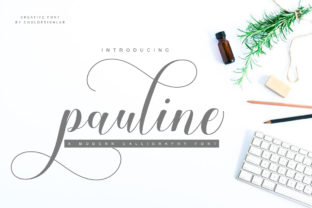
Visually, Pauline sits at the intersection of elegance and energy. Its handwritten calligraphy style feels personal and intentional—not stiff, not overly ornate, but confidently fluid. Long swashes add movement without sacrificing legibility, while subtle variations in stroke weight create rhythm and visual interest. That balance makes it ideal for marketers who need to convey sophistication (think luxury launches or boutique branding) while still feeling warm and accessible (perfect for lifestyle creators or small business storytelling).
In social media graphics, Pauline shines where first impressions matter most: Instagram story headers, Reels covers, Pinterest pin titles, and YouTube thumbnails. Because these formats demand instant recognition at small sizes, Pauline’s strong character shapes and generous x-height ensure your message lands—even when cropped or scaled down. Use it for short, high-impact phrases like “New Drop Live,” “Join the Waitlist,” or “Limited Time Only.” Avoid stacking full sentences in Pauline at tiny sizes; instead, reserve it for primary headlines and pair it with a clean sans serif (like Inter, Montserrat, or Poppins) for supporting text. That contrast delivers clarity without diluting personality.
For email campaigns and landing pages, Pauline works exceptionally well in hero sections and CTA banners. Try it in a bold size over a muted background to draw the eye straight to your offer—whether it’s a webinar sign-up, seasonal sale, or product teaser. Its expressive swashes can anchor visual hierarchy: place a long descending swash beneath a headline to guide the viewer downward toward your button or form. On mobile, keep line lengths tight and limit swash usage to one per headline to preserve readability during fast scrolling.
Brands using Pauline report stronger visual consistency across touchpoints—from digital ads to branded templates to online shop promotions. Because it’s part of the Script Amp collection, it’s built for versatility in modern typography workflows. You’ll find seamless integration in Figma, Adobe Creative Cloud, and Canva (via upload), making it practical for teams managing rapid content cycles. When used consistently as a display font for logos, quote graphics, or series headers—like “Tip Tuesday” or “Founder Stories”—Pauline becomes a recognizable signature element within your brand identity.
Real-world examples prove its flexibility. A wellness coach uses Pauline for inspirational quote graphics on Instagram, pairing it with a light-weight sans serif caption to reinforce calm authority. A Shopify store owner applies it to limited-edition product launch banners, letting the swashes echo the exclusivity of the drop. A course creator sets webinar registration banners with Pauline headlines over soft gradients—then switches to a neutral serif (like Lora or Playfair Display) for body copy to elevate credibility without competing visually. Even in packaging design mockups or editorial-style blog headers, Pauline adds dimension and intentionality that generic script fonts simply can’t match.
That said, context is key. Pauline excels as a display font, not a body font. Use it for headlines, logo marks, callouts, and decorative accents—not paragraphs or data tables. Its strength lies in contrast: let it sing above supporting type, not blend into it. For font pairing, stick to two-typeface systems whenever possible. Pair Pauline with a highly legible sans serif for captions, buttons, and subheads—or with a refined serif for more editorial or premium-facing campaigns. Avoid pairing it with other script fonts or overly decorative typefaces; that creates visual noise, not harmony.
Readability on mobile remains a top priority—and Pauline delivers when used thoughtfully. Test your Reels cover text at 75% scale before publishing. Ensure swashes don’t clip into adjacent elements or bleed off-frame. In email headers, use letter-spacing adjustments (+20–40 units) to prevent glyph collisions on smaller screens. And always preview in dark mode: some swashes may lose contrast against deep backgrounds unless adjusted manually.
Finally, remember licensing. Pauline is a commercial font, and its license covers use in client work, digital ads, templates, merchandise, and SaaS products—but always verify the specific terms before deploying in paid campaigns or downloadable assets. As a premium font, it’s an investment in your creative toolkit, one that pays off in faster engagement, higher recall, and sharper brand distinction.
If your current script font feels forgettable—or worse, inconsistent across platforms—Pauline offers a direct upgrade path. It’s not about adding flair for flair’s sake. It’s about choosing a typeface that aligns with your voice, supports your strategy, and performs reliably wherever your audience engages. In a feed crowded with sameness, Pauline doesn’t just stand out—it invites attention, builds trust, and quietly reinforces what makes your brand worth remembering.