Kiss Me or Not: A Romantic Script Font for Authentic Branding
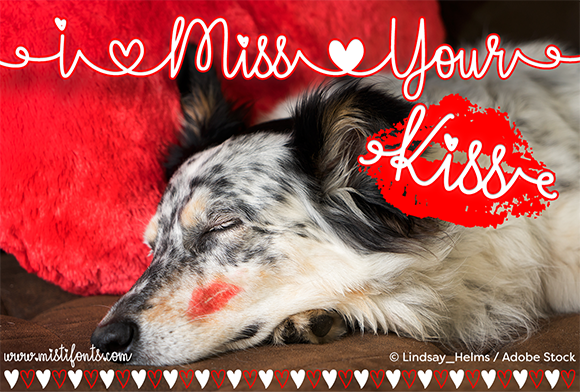
As a small business owner who’s hand-painted product labels, designed Instagram stories at midnight, and agonized over whether my café’s menu feels warm enough—I know how much a single font can shape how customers *feel* about my brand. Kiss Me or Not isn’t just another script font from Script Amp. It’s a romantic calligraphy typeface with personality—soft curves, intentional flourishes, and subtle expressive charm that reads as sincere, not saccharine.
This font breathes warmth into handmade goods, wellness offerings, and intimate service businesses. Its rhythm feels handwritten but refined—like a love note you’d tuck inside a candle box or stamp on a thank-you card for your best customer. Unlike overly ornate scripts that vanish on small packaging or blur in social thumbnails, Kiss Me or Not balances elegance with legibility. The letterforms hold their shape even at 14pt on a product label—and shine brightest at 24pt and up in logos, banners, and hero graphics.
Think about where your brand shows up most: the sticker on your shipping box, the header on your Shopify homepage, the tagline on your Instagram highlight cover. With Kiss Me or Not, those moments gain cohesion. A boutique owner used it for her logo and matching hang tags—same font, same spacing, same emotional tone. Customers began recognizing her brand before even reading the name. That’s consistency built not with expensive rebranding, but with smart, intentional typography.
Here’s how it works across real touchpoints:
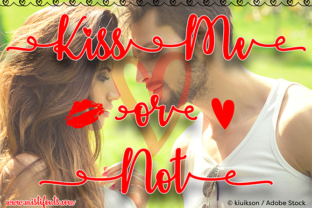
- Product labels & packaging: Type an asterisk (*) to render delicate lips—perfect for lip balm, bath salts, or romance-themed stationery. Use the backslash (\) to generate a heart border that wraps around product names or flavor descriptions. These symbols aren’t gimmicks—they’re design shortcuts that reinforce your brand’s voice without extra graphic work.
- Menus & printed collateral: A café owner applied Kiss Me or Not to her seasonal specials board and paired it with a clean sans serif (like Montserrat or Inter) for prices and ingredients. The contrast felt inviting—not fussy—and helped guests scan quickly while still feeling cared for.
- Social media & digital ads: On Instagram, this font stands out in Stories and Reels text overlays. Its natural flow guides the eye without competing with photography. For Pinterest pins, it adds quiet sophistication to quote graphics—especially for coaches, florists, or wedding vendors whose audiences respond to sincerity over flash.
- Thank-you cards & packaging inserts: Handwritten-style fonts build connection—but only if they feel human, not robotic. Kiss Me or Not avoids uniformity; its slight variation in stroke weight and baseline gives it organic movement. That’s why it works so well for notes tucked into orders—it doesn’t shout “designed,” it whispers “I made this for you.”
It’s not meant for body copy or long paragraphs—and that’s by design. Kiss Me or Not is a display font, a headline maker, an accent tool. Use it where you want attention, emotion, and memorability: logos, shop signage, email subject lines, limited-edition collection names. Pair it thoughtfully—never alone. Try it with a neutral sans serif for balance (great for websites and packaging), or with a gentle serif like Merriweather for print-heavy brands like bookshops or artisanal tea companies. Avoid pairing it with other decorative fonts; simplicity lets its charm breathe.
Before rolling it out everywhere, test it where it matters most. Print a few versions of your candle label at actual size—does the “O” in “Not” stay clear next to the heart border? Preview your Instagram post on mobile—is the script still readable at thumbnail size? Load it into your Canva or Adobe Express project and check how it renders across devices. Small details like kerning between “Kiss” and “Me” affect professionalism more than you’d expect.
Licensing matters, too. Kiss Me or Not is a commercial font from Script Amp, meaning it’s cleared for use in client work, digital templates, physical products, and merchandise—as long as you’ve purchased the appropriate license. If you’re selling printable planners, embroidery patterns, or branded mugs, confirm your license covers those uses. Skipping this step risks takedowns or legal friction down the line—no brand trust is built on shaky foundations.
Real-world examples help make it tangible. A handmade soap maker used Kiss Me or Not for her “Midnight Rose” scent name on labels, then switched to a crisp sans serif for ingredients and net weight. The result? Shelves full of products that felt cohesive, premium, and unmistakably hers. A life coach chose it for her website’s “You Are Enough” banner—paired with soft grayscale photography—and saw a 20% increase in newsletter signups. Why? Because people don’t just read words—they absorb tone, care, and intention through typography.
Fonts are silent brand ambassadors. They show up before you do—in emails, on receipts, in search results. When your font feels aligned with your values, your audience feels seen. Kiss Me or Not won’t fix inconsistent messaging or poor photography—but it *will* elevate what you already do well. It turns functional materials into emotional experiences: a label becomes a keepsake, a menu becomes a mood, a logo becomes a promise.
If your brand leans into authenticity, tenderness, or quiet confidence—this script font earns its place. Not as decoration, but as part of your voice. Use it where it connects, pair it where it clarifies, and always test it where your customers actually see it. Because great branding isn’t about perfection—it’s about resonance. And sometimes, the right font says exactly what you mean, without saying a word.