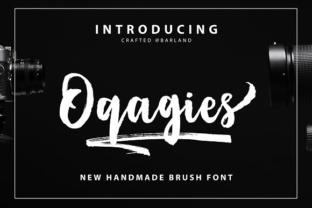
I Miss Your Kiss: A Warm, Expressive Script Font for Digital Branding
It started with a hero section—just me, a half-finished coaching website mockup, and the quiet pressure of making the first impression count. I’d already chosen a clean, airy sans serif for body text and navigation, but the headline felt flat. Too safe. Too neutral. So I reached for I Miss Your Kiss, installed it as a webfont, and typed “You’re Exactly Where You Need to Be.” Instantly, the page softened. Breathed. Felt human.
A Script Font That Carries Emotional Weight
I Miss Your Kiss is a premium script font from Script Amp—designed not just to look beautiful, but to carry tone, intimacy, and intention. It’s not overly ornate or fussy; instead, it balances graceful flow with gentle structure. The lowercase letters connect smoothly, and the uppercase forms have presence without stiffness. What makes it special isn’t just the curves—it’s the thoughtful details baked right into the character set: type an asterisk (*) for a delicate lip shape, use a backslash (\) for an open heart connection, a caret (^) for a solid heart, underscore (_) for elegant swash ligatures between letters, and the vertical bar (|) for subtle separation or rhythm. These aren’t gimmicks—they’re intentional design tools that help you layer meaning into typography itself.
How It Performs in Real Web Layouts
I tested I Miss Your Kiss across multiple responsive contexts: hero banners over soft image gradients, CTA buttons on light and dark backgrounds, section headers in a digital brand kit, and even as decorative accents in blog post graphics. On desktop, it shines at 36–60px—especially when paired with generous letter spacing and subtle text shadow for depth. On mobile? It holds up beautifully at 28–42px—but only for short, high-impact phrases. I wouldn’t recommend it for paragraph text, form labels, or navigation menus. Its strength is emotional emphasis—not functional scanning.
One standout moment came when placing it over a muted lavender background in a course sales page. Because the strokes are consistent in weight and the x-height is generous, it remained legible even with low contrast. No pixelation, no blurring—just warmth and clarity. And thanks to its OpenType features (including stylistic alternates and contextual swashes), I could easily swap in a more playful ‘a’ or a flourished ‘t’ for visual variety—without switching fonts.
Smart Pairings for Balanced Digital Design
Like any strong display font, I Miss Your Kiss thrives in contrast. I consistently paired it with a friendly, highly legible sans serif—think Inter, Poppins, or even a refined system font stack like "system-ui", -apple-system, "Segoe UI". For editorial-style sites or boutique brands leaning into sophistication, a warm serif like Cormorant Garamond worked surprisingly well for subheads. The key is balance: let I Miss Your Kiss breathe as your voice, and let the supporting font serve as your guide.
What didn’t work? Trying to force it into dense layouts—like stacked feature lists or comparison tables. It’s not built for utility. Nor did it translate well in tiny button labels (<14px), where the swashes and connections began to blur. But as a hero title, a testimonial quote, a section divider (“Your Journey Starts Here”), or even as stylized social media graphics exported from Figma? It elevated everything.
Practical Considerations for Web Use
Before deploying I Miss Your Kiss live, I checked three things: webfont format support (WOFF2 included—excellent), licensing clarity (Script Amp grants full commercial web use, including client projects and SaaS platforms), and fallback behavior. With proper CSS font loading and a graceful fallback stack, it degrades cleanly—even if the font fails to load, the message stays readable.
I also verified multilingual support. While it covers Latin-based languages thoroughly—including accented characters for Spanish, French, and German—it doesn’t include extended Cyrillic or Asian language glyphs. That’s fine for most lifestyle, coaching, or creative brands—but worth noting if your audience spans broader regions.
Accessibility-wise, I kept headings semantic (
, ) and ensured sufficient color contrast (tested with axe DevTools). Because I Miss Your Kiss is decorative by nature, I never used it for critical UI text—only for expressive, non-essential elements where tone matters more than speed of comprehension.
Where This Font Fits Best—and Where It Doesn’t
Where This Font Fits Best—and Where It Doesn’t
I Miss Your Kiss excels in moments that invite pause: a welcome message on a portfolio homepage, a heartfelt tagline on a wellness landing page, a signature line in a digital brand kit, or a hand-crafted feel in a small business email header. It adds sincerity to a coaching site, romance to a wedding planner’s service page, and authenticity to a handmade product store’s “About” section.
It’s less ideal for dashboards, documentation sites, e-commerce category filters, or any interface where users scan quickly for information. It’s also not meant for long-form blog content—though it works beautifully as pull quotes or chapter titles within that content.
In short: I Miss Your Kiss isn’t background typography. It’s foreground feeling. It’s the handwritten note tucked inside a digital experience—the kind that makes visitors slow down, smile, and remember your brand not just by what you say, but how it feels to read it.