Handwritten Bold: A Confident Script Font for Editorial Design
When you’re shaping the visual voice of a publication—whether it’s a weekly newsletter, a seasonal digital magazine, or a beautifully crafted ebook—the right display font does more than catch the eye. It signals tone, builds trust, and quietly guides how readers feel before they’ve read a single sentence. Handwritten Bold, designed by Darwinoo and part of the Script Amp collection, is one of those rare script fonts that balances expressive energy with editorial clarity. It’s not just decorative—it’s functional, intentional, and deeply suited to creators who care about both aesthetics and audience experience.
A Script Font That Commands Attention—Without Overpowering
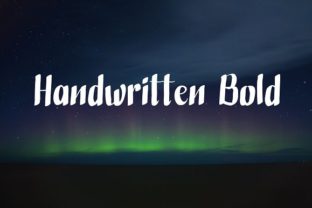
Handwritten Bold has the warmth and rhythm of authentic pen-on-paper movement, but with deliberate structure: strong downstrokes, open letterforms, and generous spacing baked into its design. Unlike many handwritten fonts that lean heavily into whimsy or informality, this one carries authority. The “bold” in its name isn’t just about weight—it’s about presence. Letters like g, y, and Q feature subtle flourishes that add character without compromising legibility at larger sizes. It’s a modern script font that avoids trend fatigue because it prioritizes readability first, personality second.
Where Handwritten Bold Earns Its Place in Your Layouts
This font thrives where hierarchy and mood matter most—not in body text, but in the moments that shape perception:
- Covers and title pages: Use Handwritten Bold for ebook titles or magazine cover lines. Its confident rhythm pairs naturally with minimalist layouts, letting content breathe while still anchoring the composition.
- Blog headers and section dividers: Replace generic sans serif headings with Handwritten Bold for lifestyle posts, personal essays, or creative prompts. It adds warmth without sacrificing professionalism.
- Quote graphics and pull-outs: In newsletters or social media previews, short quotes set in Handwritten Bold stand out against clean backgrounds—ideal for coaching workbooks, mindfulness guides, or literary excerpts.
- Chapter openers and printable guides: Pair it with a neutral serif or sans serif for body copy, then use Handwritten Bold for chapter titles or worksheet headers. Its contrast helps readers orient themselves visually—especially helpful in long-form printables like wedding planning kits or habit trackers.
- Branding accents: For independent publishers building a distinct identity, Handwritten Bold works well in logo lockups, email signature lines, or branded PDF footers—adding a human touch that feels intentional, not improvised.
Practical Considerations for Real-World Publishing
Handwritten Bold performs reliably across formats—but knowing when and how to deploy it makes all the difference. On screen, it reads cleanly at 24–36pt for headlines and 18–22pt for subheads. In PDF exports, it embeds cleanly and maintains crisp edges, even when zoomed. For print, test at 14pt+ for display use; smaller sizes risk losing its expressive nuance. Mobile layouts benefit from its generous x-height and spacing—no awkward crowding on narrow viewports.
It’s worth noting that Handwritten Bold is a display font—not meant for extended reading. Reserve it for short, high-impact text: titles, callouts, labels, and branding elements. For body copy, pair it thoughtfully: a warm serif like Merriweather or a neutral sans like Inter offers excellent contrast and balance. Avoid pairing it with other script fonts or overly ornate typefaces—clarity should remain the priority.
Designing With Intention: Pairings, Weights, and Language Support
The Handwritten Bold family includes standard OpenType features—ligatures, stylistic alternates, and contextual swashes—that let you fine-tune expression without switching fonts. These are especially useful in editorial contexts where consistency matters: a recurring quote style across an ebook, or a signature header treatment in a monthly newsletter. While it’s optimized for English-language publishing, basic Latin character support covers most Western European languages, making it viable for bilingual blogs or international creator audiences.
As with any premium font used commercially, licensing matters. If you’re embedding Handwritten Bold in client-facing deliverables—ebooks sold on Gumroad, Canva templates, paid newsletters, or printable planners—verify that your license covers distribution. Many designers overlook this until a platform flags embedded fonts in exported PDFs or hosted web assets. Darwinoo’s licensing terms are clear and scalable, supporting everything from solo creators to small studios.
Real Editorial Use Cases—Beyond the Obvious
Consider how Handwritten Bold supports specific content types:
- A recipe ebook uses it for dish names and section headers (“Breakfast Staples,” “Weeknight Dinners”), paired with a friendly serif for ingredient lists and instructions.
- A coaching workbook applies it to reflection prompts (“What’s one boundary you’d like to honor this week?”), giving psychological weight to the question without overwhelming the page.
- A digital magazine deploys it selectively—only on the masthead and feature article titles—to create visual rhythm across issues without diluting its impact.
- A wedding guide sets venue names and timeline milestones in Handwritten Bold, reinforcing elegance and personalization while keeping vendor details in a highly legible sans serif.
- A creator newsletter uses it for subject line previews in email graphics and as a recurring accent in the footer—building recognition over time, not just novelty.
What makes Handwritten Bold endure isn’t its flair—it’s its restraint. It doesn’t shout. It leans in. It invites attention without demanding it. In an era where so much content competes for micro-seconds of focus, choosing a script font that balances humanity with structure is a quiet act of editorial care. Whether you’re refining your brand identity, designing your first ebook, or rethinking how your newsletter lands in someone’s inbox, Handwritten Bold offers a voice that’s both distinctive and dependable—a genuine asset in the Fonts category, and a thoughtful tool in any editorial designer’s kit.