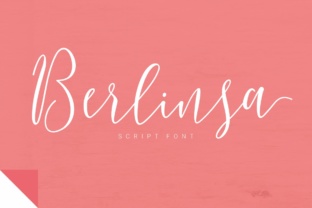
Berlinsa: A Modern Handwritten Script for Editorial Design
As someone who crafts stories across blogs, digital magazines, and print-ready guides, I’ve learned that typography isn’t just about aesthetics—it’s about tone, trust, and attention. When a reader lands on your newsletter header, pauses at a pull quote in an ebook, or lingers over the cover of a downloadable workbook, the typeface is doing quiet, essential work. That’s why Berlinsa Script has become a consistent presence in my design toolkit: it’s a modern handwritten script with a smooth, confident rhythm—neither overly ornate nor artificially casual.
Berlinsa belongs to the Script Amp category—a thoughtful evolution of the handwritten genre. Its letterforms balance fluidity and control: generous x-heights, subtle entry/exit strokes, and gentle contrast between thick and thin lines. There’s no shaky uncertainty here—just the warmth of human touch refined for clarity and consistency. It reads as contemporary, approachable, and intentional—ideal for creators building a distinct voice without sacrificing professionalism.
In editorial layouts, Berlinsa excels where personality meets purpose. Use it for cover titles on lifestyle ebooks or seasonal newsletters—its graceful curves invite readers in before they’ve read a word. Apply it to chapter openers in long-form guides, where a single line of Berlinsa sets the mood for what follows. For quote graphics, especially in coaching workbooks or mindfulness journals, Berlinsa adds emotional resonance without competing with the message. And because its spacing and rhythm support visual breathing room, it works beautifully in printable planners and lead magnets, where clean hierarchy matters more than decorative flair.
It’s not meant for body text—and that’s by design. Berlinsa is a display font, best deployed where impact and identity matter most: headlines, section dividers, branded headers, social media banners, and logo lockups. In a recipe ebook? Try Berlinsa for dish names above clean, highly legible serif body copy. In a wedding planning guide? Use it for “Chapter 3: The Guest List” while keeping instructions in a warm sans serif. For a digital magazine cover, layer Berlinsa over a muted photo background—the contrast between organic line and crisp imagery creates instant visual tension and focus.
Readability across formats is another strength. Berlinsa renders cleanly on screens, holds up well in PDF exports (especially when embedded), and maintains character in high-resolution print. On mobile, it shines in hero sections and email subject-line graphics—provided it’s sized thoughtfully and paired with ample whitespace. No pixelation, no awkward kerning surprises. Just reliable performance where it counts.
Font pairing is where Berlinsa reveals its editorial intelligence. It harmonizes effortlessly with classic serifs like Adobe Garamond or STIX Two Text—ideal for long-form articles and printed zines. With neutral sans serifs like Inter or IBM Plex Sans, it grounds branding systems: Berlinsa for voice, the sans for function. Even in logo design or packaging design for creative fonts, Berlinsa offers flexibility—its alternates and ligatures (included in the full family) let you fine-tune rhythm for specific words or brand initials.
The full Berlinsa package includes multiple weights and stylistic sets—not just regular and bold, but carefully considered variations that preserve its handwritten integrity while expanding utility. Multilingual support covers Western European languages thoroughly, making it viable for bilingual newsletters or globally distributed digital products. And crucially, its commercial license covers exactly what independent creators need: use in client publications, paid newsletters, template kits, printable downloads, and ebook distribution—no hidden restrictions or tiered permissions.
I’ve used Berlinsa across very different projects—and each time, it reinforced how much a well-chosen script font can unify a brand’s visual language. In a quarterly creator newsletter, it became the signature for “This Week’s Insight”—a small detail that readers began to recognize and anticipate. In a printable goal-setting workbook, it gave section headers warmth without diminishing structure. For a boutique coaching brand, Berlinsa anchored their entire identity system: from website headlines to Instagram quote cards to printed workshop handouts. It didn’t shout—but it held space with quiet authority.
What makes Berlinsa stand out among modern typography options isn’t novelty, but nuance. It avoids the trend-driven extremes of ultra-thin scripts or aggressively textured handwriting fonts. Instead, it delivers a grounded, versatile, and genuinely readable script font—one that supports rather than overshadows content. That’s rare. In editorial design, where clarity and connection are non-negotiable, Berlinsa doesn’t distract. It deepens.
If you’re selecting fonts for a new blog series, launching a digital magazine, or refining your course materials’ visual identity, consider how Berlinsa might serve your readers—not just as decoration, but as a consistent, empathetic voice. Pair it intentionally. Use it sparingly but meaningfully. Let it carry weight where weight matters most. Because in publishing, every typographic choice is also a promise: to be seen, understood, and remembered.