Angelisa Script: A Refined Display Font for Editorial Design
As a publisher and editorial designer who builds digital and print content for readers—not algorithms—I’ve learned that typography isn’t just about aesthetics. It’s about tone, trust, and intention. When a reader lands on a blog header, opens an ebook cover, or pauses at a pull quote in a newsletter, the typeface quietly signals what kind of experience lies ahead. That’s why Angelisa Script stands out in the Script Amp category: it’s not merely decorative handwriting—it’s a considered, expressive display font built for clarity, warmth, and quiet authority.
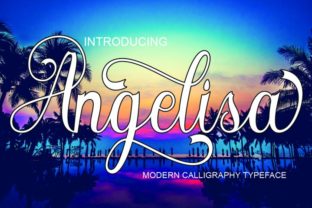
Angelisa balances elegance with legibility. Its strokes flow with rhythmic contrast—moderate thick-to-thin transitions, open counters, and generous spacing—making it far more readable than many ornamental scripts at small sizes or on screen. The terminals are clean, not overly flourished; the baseline remains stable, avoiding erratic vertical shifts that disrupt visual rhythm. It feels hand-drawn but never rushed—like ink carefully laid down by a practiced hand, not a hurried note. That restraint gives Angelisa editorial credibility: it invites attention without demanding it.
In practice, Angelisa excels where voice matters most. Use it for magazine covers to anchor a strong visual identity—think seasonal editions of a lifestyle publication, where the title needs personality without sacrificing sophistication. Pair it with a warm serif like Adobe Garamond or STIX Two Text for body copy, and you create a hierarchy that feels intentional and human-centered. For ebooks, apply Angelisa to chapter titles and section dividers—not full paragraphs. Its character set includes standard ligatures and stylistic alternates (like a refined lowercase “f” or connected “st” pair), which add subtle polish when enabled in design apps like InDesign or Affinity Publisher.
Newsletter creators will find Angelisa especially effective in quote graphics and lead-ins. A single line of text—“Clarity begins with simplicity”—set in Angelisa over a soft background, carries emotional weight without visual noise. Because its x-height is generous and letterforms remain distinct even at 24–36pt on mobile screens, it renders well across devices. Test it in your email client preview: unlike many script fonts, Angelisa avoids pixelation or awkward kerning gaps in Outlook or Gmail web interfaces.
For printable guides—wedding planning workbooks, coaching reflection sheets, or recipe collections—Angelisa adds tactile warmth. Set it as a title above a clean sans serif like Inter or Source Sans Pro, and you immediately signal approachability and care. Its curves soften the rigidity of grids and tables, making structured content feel more personal. And because Angelisa supports Latin-based languages (including accented characters for French, Spanish, and Portuguese), it scales gracefully across international creator audiences—no need for fallback substitutions mid-sentence.
That said, Angelisa is not intended for long-form reading. It’s a display font, not a body font—and using it for paragraphs would undermine both readability and its own strengths. Reserve it for moments that benefit from emphasis: cover text, section headers, callout boxes, social media quote cards, and branded PDF headers. In a digital magazine layout, try Angelisa for recurring column titles (“Notes from the Studio”, “Reader Letters”) while keeping body text in a highly legible serif or neutral sans. This creates continuity without visual fatigue.
Font pairing is where Angelisa reveals its versatility. With serifs, it leans classic and literary—ideal for literary newsletters or academic course materials. With modern sans serifs, it gains contemporary energy, perfect for creative business brands or wellness guides. Avoid pairing it with other scripts or overly geometric typefaces; contrast works best when grounded in function. A light weight of Work Sans for captions, Angelisa for headings, and a muted color palette yields clean, confident layouts every time.
Readability extends beyond screen rendering. When exporting to PDF for printables or client deliverables, Angelisa embeds cleanly in Adobe Acrobat and maintains crisp edges—even at 100% scale on letter-sized planners or workshop worksheets. No blurry edges, no missing glyphs. And for those building templates sold on Creative Market or Gumroad: Angelisa is licensed for commercial use, including ebooks, paid newsletters, editable Canva templates, and physical print runs. Just verify your license includes desktop + web use if embedding in a member portal or web app.
Consider how Angelisa functions within a broader brand identity. A creator launching a new newsletter series might use Angelisa for the masthead logo, then echo its curve in custom dividers or icon outlines. A cookbook author could feature Angelisa on the spine and front cover, then echo its rhythm in hand-drawn ingredient icons. These subtle echoes build recognition—not through repetition, but resonance. That’s the power of a thoughtfully chosen script font: it becomes part of the voice, not just the decoration.
Ultimately, Angelisa Script supports reader engagement by honoring attention. It doesn’t shout. It doesn’t distract. It offers a moment of grace—a pause, a breath, a signature—in layouts that often move too fast. Whether you’re designing a quarterly digital zine, a downloadable guide for therapists, or a branded worksheet for educators, Angelisa helps your message land with sincerity and style. It’s a premium font that earns its place—not because it’s flashy, but because it serves the reader, the content, and the craft.
For editorial designers, bloggers, and independent creators building sustainable content brands, Angelisa isn’t just another script font. It’s a tool for consistency, a cue for calm, and a quiet affirmation that how something looks matters—especially when what it says matters even more.