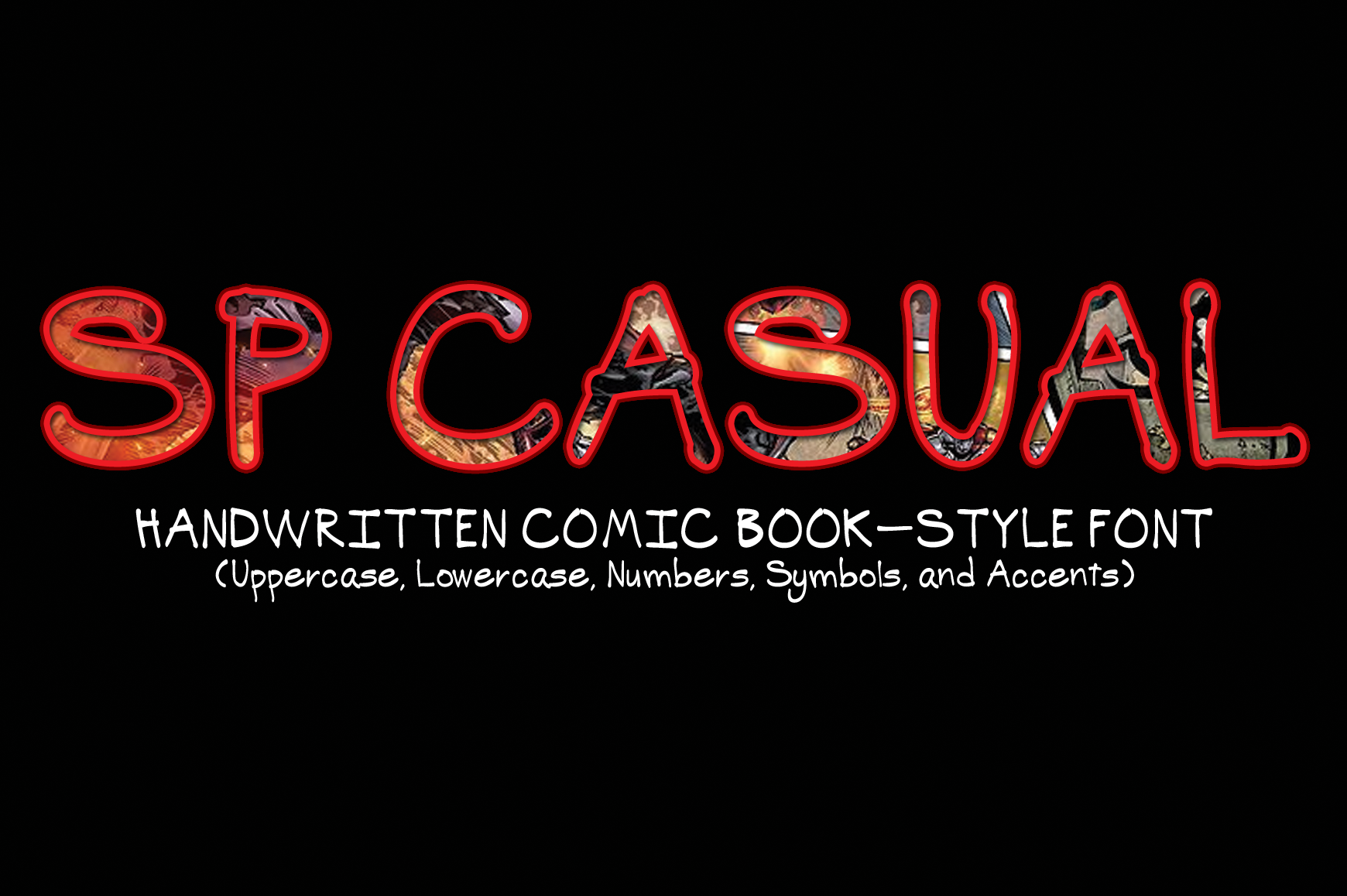
SP Casual: A Friendly, Polished Script Font for Small Business Branding
Last Tuesday, I was helping a local candle maker update her jar labels—simple white kraft paper, minimalist layout, warm tone. She’d been using a free handwritten font from years ago, but it looked inconsistent across sizes: the “g” wobbled on small stickers, the “S” vanished entirely in thumbnail previews, and the uppercase letters felt disconnected from the lowercase flow. That’s when we swapped in SP Casual. Within ten minutes, her label mockup went from “cute but unclear” to “confident and cohesive”—no redesign needed, just better typography.
What Makes SP Casual Feel Like a Real Business Tool?
SP Casual is a script font—but not the kind that tries too hard. It’s relaxed, natural, and slightly bouncy, with smooth curves and open letterforms that breathe on the page. Unlike ornate script fonts that demand attention (or feel overly formal), SP Casual lands somewhere between “I wrote this myself” and “I hired a designer.” It’s a display font built for visibility and warmth—not for long paragraphs, but for moments where your brand says hello: product names, shop banners, thank-you cards, Instagram story headers, or the “Hand-Poured” line on a soy wax candle jar.
What stood out during real use? Its full alphabet support—both uppercase and lowercase—in clean, harmonious proportions. No awkward swaps between weights or mismatched x-heights. The lowercase “a,” “e,” and “o” have generous counters (the open spaces inside letters), which means they stay legible even at 10pt on a tiny sticker or 14px on a mobile banner. And because it’s part of the Script Amp collection, it’s designed with commercial use in mind: consistent spacing, balanced rhythm, and clear visual hierarchy.
Where SP Casual Actually Works Best (and Where to Use It Wisely)
We tested SP Casual across six common small business touchpoints—and here’s what held up:
- Product labels & packaging: Perfect for short descriptors like “Lavender + Vanilla” or “Small Batch” on skincare jars or bakery boxes. Avoid cramming more than three words per line—it shines brightest as a title or accent, not body text.
- Thank-you cards & gift tags: Its casual charm feels personal without looking DIY. Paired with a crisp sans serif for the address or date, it adds polish while keeping warmth.
- Menu headers & café signage: On a chalkboard-style digital menu or printed sandwich board, SP Casual gives “Avocado Toast” or “House Roast” a friendly, approachable lift—without sacrificing readability from across the room.
- Social media graphics: Works beautifully in Instagram carousel headers, Reel text overlays, and Pinterest pins—especially when scaled to 36–48px. Just avoid thin strokes on low-res thumbnails; its medium weight holds up better than ultra-light scripts.
- Online shop banners & digital ads: As a headline font over a soft background image, SP Casual creates instant visual contrast and emotional resonance—ideal for handmade, wellness, or lifestyle brands.
One note: SP Casual isn’t meant for logos that need extreme scalability (like tiny embroidery or embroidered patches). But for web logos, email headers, or storefront signage? It delivers personality *and* professionalism—especially when paired thoughtfully.
Smart Pairings That Keep Your Brand Looking Intentional
Typography works best in conversation—not solo. SP Casual pairs effortlessly with clean, neutral fonts that let its character shine without competing. Try it with:
- A friendly sans serif font (like Montserrat, Inter, or Poppins) for body text, pricing, or ingredient lists—creating balance between warmth and clarity.
- A subtle serif font (like Merriweather or Lora) for elegant contrast—great for boutique tags or artisanal tea packaging where tradition meets approachability.
- Even another script font, if used sparingly—for example, SP Casual for the main brand name and a thinner, more delicate script for a tagline like “made with care.”
The key is contrast with consistency: same baseline alignment, similar x-height, and complementary energy. When SP Casual leads and a grounded sans follows, your materials look intentionally designed—not pieced together.
Before You Install: Quick Checks Every Small Business Should Make
Before dropping SP Casual into your next Canva template or Adobe file, take two minutes to verify:
- Licensing: Confirm it’s cleared for commercial use—including physical products (candle labels, tote bags), digital templates (for sale or client work), and social media assets. As a Fonts product under Script Amp, SP Casual includes standard commercial licensing, but always double-check the license file included with your download.
- File formats: Look for OTF and TTF files—they’re widely supported across design tools, Cricut Design Space, Silhouette Studio, and most print vendors.
- Character set: SP Casual includes the full Latin alphabet plus common punctuation—but if you regularly use accented characters (like café, naïve, or jalapeño), test those before finalizing packaging or web copy.
- Readability in context: Print a sample label at actual size. Zoom out to 25% on screen—does the word “Honey” still read clearly? If yes, you’re golden.
Typography isn’t about perfection—it’s about presence. With SP Casual, your brand doesn’t have to shout to be seen. It just needs to show up, consistently, warmly, and unmistakably yours.