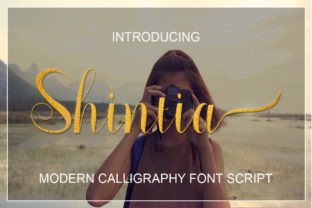
Shintia: A Modern Calligraphy Font That Elevates Your Brand
Last Tuesday, I sat at my kitchen table with a stack of candle jar labels—handwritten drafts, printed proofs, and three different fonts I’d tried in Canva. Nothing felt quite right. My small-batch soy candles are warm, intentional, and quietly luxurious—but the typography kept whispering “generic,” not “thoughtful.” That’s when I discovered Shintia, a modern calligraphy font crafted by hand at Imun Studio. It wasn’t just another script font. It was the missing piece that made everything else click.
Shintia has this gentle confidence to it—fluid but grounded, elegant but approachable. It’s not overly ornate or fussy; instead, it feels like handwriting you’d want to trace with your finger: smooth curves, subtle contrast in stroke weight, and a natural rhythm that breathes on the page. As part of the Script Amp collection, it’s designed specifically for impact—not just decoration. Whether you're naming a lavender-vanilla candle, labeling a ceramic mug, or designing a seasonal Instagram post, Shintia adds polish without pretension.
I started using Shintia for my most visible touchpoints first: the front label on each candle jar, the header on my thank-you cards, and the banner image for my Etsy shop. Right away, things looked more cohesive. Before, my packaging felt like a collage of mismatched fonts—some too stiff, some too playful. Now, even at a glance, customers know it’s *mine*. That consistency builds trust. When people see the same graceful flow across your website, your sticker seal, and your menu board, they subconsciously register your brand as intentional—and that makes them more likely to pause, remember, and return.
Here’s where Shintia shines best: short, meaningful phrases. Think “Small Batch • Hand-Poured” on a kraft paper tag, “Oat Milk Latte” on a café chalkboard menu, or “Gentle • Clean • Radiant” on a skincare sample sachet. It’s a display font—not meant for long paragraphs, but perfect for logos, product names, headers, and decorative accents. On mobile screens, it holds up beautifully in social media graphics and digital ads, especially when used at 24pt or larger. For tiny jar labels (think 1.5-inch width), I stick to just one or two words in Shintia—like the scent name—paired with a clean sans serif for ingredients or care instructions. That combo keeps things legible *and* lovely.
Typography is often the quietest part of branding—and the most powerful. First impressions happen in under two seconds. If your business card, Instagram highlight icon, or online shop banner uses a tired default font, you’re asking people to work harder to connect with your story. But when you choose a considered typeface like Shintia, you’re saying, “I care about how my brand feels—not just what it says.” That matters deeply to customers who value craftsmanship, authenticity, and attention to detail—whether they’re buying handmade soap, ordering coffee, or booking a wellness session.
One of the nicest surprises? How well Shintia pairs with other fonts. I use it with Inter (a friendly, highly readable sans serif) for all body text—on labels, websites, and email newsletters. The contrast works like a conversation: Shintia speaks with warmth and character; Inter listens with clarity and calm. For a more editorial feel—say, on a boutique’s seasonal lookbook—I’ve paired it with a soft serif like Playfair Display. And if you love mixing scripts, Shintia plays nicely alongside simpler handwritten fonts for secondary accents, as long as you keep hierarchy clear (Shintia for the headline, something lighter for the tagline).
Before finalizing any design, I always double-check what’s included in the Shintia font package. It comes with OpenType features like ligatures and stylistic alternates—small touches that make “The” or “And” look more natural when typed out. It supports Latin-based languages and includes both .OTF and .TTF files, so it works smoothly in Adobe apps, Canva, and even Cricut Design Space. Most importantly, it’s a commercial font with full licensing—meaning I can use it on physical products, packaging, merchandise, client projects, and digital templates without worrying about permissions. That peace of mind? Priceless.
Real talk: You don’t need a full rebrand to start benefiting from better typography. Try swapping out one font—just one—with Shintia. Redesign your next batch of thank-you cards. Refresh your Instagram Story template. Update your Etsy shop banner. Watch how much more grounded and memorable your visuals feel. I did—and suddenly, my little candle business didn’t just smell like amber and sage. It *looked* like it, too.
Whether you run a neighborhood bakery, an online herbal apothecary, a cozy café, or a handmade jewelry shop, Shintia gives your brand voice and visibility. It’s not flashy. It’s not trying too hard. It’s simply human, hand-drawn, and ready to help your business look like the thoughtful, professional, and unmistakably *you* experience it truly is.
- Use Shintia for logos, product names, packaging headers, and social media banners
- Pair it with a clean sans serif (like Inter or Montserrat) for balance and readability
- Avoid using it for fine print or dense text—save it for moments that deserve attention
- Check file formats and licensing before applying it to physical goods or client work
- Test how it looks at real sizes—on a 2-inch sticker, a phone screen, or a printed menu