Misgaretha: A Hand-Drawn Script Font for Thoughtful Editorial Moments
It was a quiet Tuesday morning—coffee still warm, inbox light, and the first draft of a new seasonal newsletter sitting open on my screen. The content felt right: gentle, grounded, full of small rituals and intentional pauses. But the header? It read like an afterthought—generic, overused, visually loud where it needed to breathe. That’s when I reached for Misgaretha.
A Font That Listens Before It Speaks
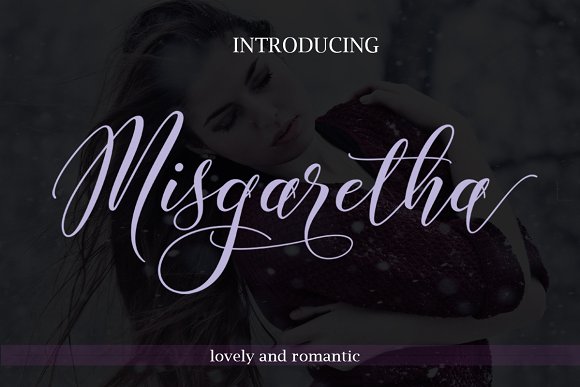
Misgaretha is a hand-drawn script font from the Script Amp collection, designed not for flash, but for presence. Its strokes carry the soft confidence of ink on paper—slight tapering, organic variation in line weight, and a rhythm that feels unhurried rather than hurried. There’s no forced flourish or artificial bounce; instead, there’s a quiet consistency in its flow, like handwriting you’d trust with a personal note or a handwritten recipe card passed between friends.
I tested it across several real editorial contexts: a digital magazine feature page on slow living, a printable coaching workbook for boundary-setting exercises, and the cover title of a short recipe ebook focused on pantry staples. In each case, Misgaretha didn’t shout—it anchored. It gave the layout space to settle, inviting readers into the tone before they’d even read the first sentence.
Where Misgaretha Finds Its Rhythm
This isn’t a font built for body copy. Its expressive character shines brightest in moments of emphasis and intention: chapter openers, pull quotes set in generous leading, newsletter headers above clean sans serif body text, or titles on printable planners where warmth matters more than speed.
In a wedding guide PDF, I used Misgaretha for section dividers (“The First Look,” “Vows & Voices,” “After the Toast”)—each rendered in 36pt with subtle letter spacing. Paired with a warm, low-contrast serif for captions and instructions, it created visual hierarchy without hierarchy feeling rigid. Readers told me those headings felt like quiet invitations—not announcements.
For a lifestyle blog redesign, I applied Misgaretha only to the main headline above featured posts—not every article title, just the ones introducing deeper features. That selective use preserved its impact. Overuse would dilute its editorial weight; restraint made it feel like a signature, not a stamp.
Readability Across Mediums—What Works, What Doesn’t
On screen, Misgaretha holds up well at 24–48pt sizes, especially against light or muted backgrounds. Its open counters and clear letterforms avoid the common pitfalls of overly tight or tangled scripts. On mobile, I found it best reserved for hero graphics or email headers—not navigation menus or captioned social previews, where clarity trumps charm.
In print, it performs beautifully in PDF exports and physical booklets, particularly when exported as vector outlines or embedded with proper font licensing. I’ve used it successfully in printed workbooks and planner inserts—but always alongside a highly legible companion: a classic serif like Adobe Garamond or a neutral sans like Inter or Lato for supporting text.
That said, Misgaretha isn’t suited for dense paragraphs, footnotes, image captions under 12pt, or formal reports where neutrality and authority are primary goals. Its personality is too present for those roles—and that’s its strength, not a limitation. Knowing where it *doesn’t* belong helps you honor where it does.
Pairing With Purpose
Script fonts live in relationship—not isolation. With Misgaretha, I’ve found harmony most often with typefaces that offer contrast without conflict. A soft, slightly rounded sans serif (like Poppins Light or Nunito) gives modern balance. A gentle serif (Cormorant Garamond or EB Garamond) adds timeless texture. Even a monospace used sparingly—for code snippets in a creator course PDF—creates an elegant tension.
The key is shared warmth. Avoid stark, high-contrast sans serifs (think Helvetica Bold or Montserrat Black) unless you’re aiming for deliberate dissonance. Misgaretha doesn’t ask to be framed by rigidity—it asks to be held gently.
Practical Notes for Real Publishing Work
Before adding Misgaretha to your next project, check what’s included: standard OpenType features like ligatures and stylistic alternates can elevate subtlety—especially in longer words or repeated letters. I used the ‘&’ alternate in a newsletter banner and appreciated how it softened the visual weight without sacrificing recognition.
Licensing matters, especially for digital products. If you’re embedding Misgaretha in a paid printable planner, client-facing template, or downloadable course PDF, confirm the commercial license covers redistribution. Some Script Amp fonts include web font kits; others are desktop-only. Always verify file formats (OTF, WOFF2, etc.) and multilingual support if your audience spans languages beyond basic Latin.
And one quiet reminder: fonts like Misgaretha thrive when paired with thoughtful whitespace, intentional color palettes, and content that matches its cadence. It won’t fix weak structure—but it will quietly dignify strong intent.
Back at that newsletter header? I kept Misgaretha. Not because it was trendy, but because it felt like the first true pause in a day full of noise—a small, human gesture before the words began.