Comic Land: A Playful Script Font for Digital Branding
I was deep in the final layout phase of a creative coaching website—clean, warm, and intentionally human—and the hero headline just felt flat. I’d tried three different sans serifs, then a soft serif, but none carried the lightness and approachability the founder wanted to project. That’s when I pulled up Comic Land, the script font from Darwinoo in the Script Amp collection. Within seconds of dropping it into Figma as a display typeface for the main headline, the tone shifted: friendly, confident, and unmistakably hand-crafted—but not childish, not chaotic.
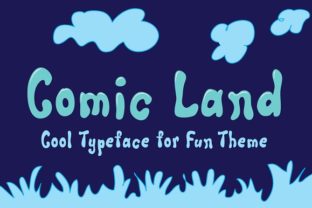
Comic Land is a modern script font with subtle bounce, gentle contrast, and relaxed letterforms that avoid the rigidity of calligraphic fonts or the overused flourishes of many decorative scripts. It’s not a handwriting font—it’s more intentional than that—but it carries the warmth and rhythm of a skilled pen-on-paper gesture. The lowercase ‘a’, ‘g’, and ‘y’ have open, airy shapes; the uppercase letters sit comfortably tall without shouting. It feels like a conversation starter—not a banner, not a billboard, but an invitation.
In that coaching site, I used Comic Land exclusively for the hero headline (“Your Growth, Drawn With Care”) and the section title “What You’ll Discover”. Everything else—the body copy, testimonials, navigation, and CTA buttons—stayed in a neutral, highly legible sans serif (Inter, loaded via Google Fonts). That pairing worked because Comic Land isn’t built for paragraphs or dense interface text. It’s a display font: best at short, high-impact moments where personality matters most.
That’s where its strength lives—in context. On a boutique online store homepage, I’ve seen Comic Land shine in product category banners (“Handmade Ceramics”, “Small-Batch Jams”) overlaid on soft-focus lifestyle photography. Its curves soften sharp image edges and add tactile charm without competing with product details. On a course sales page, it elevated the headline “Start Your First Zine—No Experience Needed” while keeping the bullet points, pricing table, and enrollment button crisp and scannable in a supporting sans serif.
Readability is always top of mind—especially on mobile. Comic Land holds up surprisingly well at 32–48px on desktop, and at 28–36px on mobile viewports, provided line height is generous (1.3–1.4) and letter spacing is slightly open (+10–20 units). I avoid using it below 24px, even for subheadings. It’s also forgiving on both light and dark backgrounds, though I skip pure black text on pure white—it can feel too stark. A warm off-white or charcoal works better, especially when paired with soft shadows or subtle background textures.
One thing I always check before committing: webfont availability and licensing. Comic Land is available as WOFF2 (ideal for fast loading), includes Latin multilingual support (covers English, Spanish, French, German, Portuguese), and comes with standard OpenType features—no hidden alternates or stylistic sets required, which keeps implementation simple. Since it’s a commercial font from Script Amp, I confirmed the license covers web embedding, client projects, and SaaS dashboards—no surprises later.
Font pairing is where Comic Land really earns its place. It doesn’t want competition—it wants contrast. I consistently pair it with clean, humanist sans serifs like Inter, Poppins, or Manrope for UI elements and body text. For more editorial or luxury-leaning sites—a literary blog, a small press portfolio—I’ve paired it with a refined serif like Cormorant Garamond or Literata for headings, letting Comic Land handle only the most expressive moments (like pull quotes or chapter titles). Never pair it with another script or decorative face—that dilutes clarity and weakens hierarchy.
It’s also worth noting what Comic Land *isn’t* meant for. Don’t use it for navigation labels, form fields, or button text under 16px. Skip it for data tables, pricing cards with tight spacing, or anything requiring rapid scanning. And while it works beautifully as logo text for creative studios, indie brands, or makers’ shops, avoid stretching or distorting the glyphs—it’s designed to breathe at its natural proportions.
In a recent digital brand kit project for a children’s illustration educator, Comic Land became the anchor for all visual storytelling: workshop headers, social media quote graphics, email subject lines, and even animated intro text in Lottie files. Because it’s lightweight and expressive, it translated seamlessly across formats—no rendering hiccups in Safari, no fallback jank in Chrome, and consistent weight distribution across devices.
What surprised me most wasn’t just how well it performed technically—but how much it shaped perception. On user testing calls, people described the site as “welcoming”, “thoughtful”, and “made by someone who cares about craft”. That’s not just color or layout doing the work. That’s typography earning trust, one carefully shaped curve at a time.
If you’re building something that values authenticity over austerity—whether it’s a portfolio, landing page, course launch, or small business site—Comic Land is a premium font that adds voice without volume. It doesn’t shout. It leans in. And in today’s crowded digital space, that kind of quiet confidence is rare, memorable, and deeply usable.
- Best for: Hero headlines, section titles, short CTAs, logo text, social graphics, campaign banners
- Avoid for: Body copy, navigation, small buttons, dense interfaces, multi-language long-form content
- Pair with: Humanist sans serifs (Inter, Manrope) or elegant serifs (Cormorant Garamond) for balance
- Check before deploying: Webfont format (WOFF2), licensing scope, multilingual coverage, and responsive sizing behavior