BlueHand: A Handwritten Font That Feels Human in Fast-Scrolling Feeds
It was 3 p.m. on a Tuesday—two days before the launch of a four-part Instagram content series for a small online course on mindful journaling. I’d just opened the final thumbnail mockup in Figma, layered the headline over a soft watercolor background, and hit preview on my phone. The text read “Your First Entry Starts Here.” But something felt off. The current sans serif font looked clean—but sterile. Like reading instructions instead of an invitation. That’s when I swapped it for BlueHand.
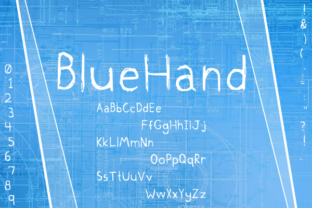
Instantly, the tone shifted. Not dramatically—but *recognizably*. BlueHand is a handwritten font designed by Marlee Pagels, released under Script Amp’s curated collection of expressive typefaces. It doesn’t mimic calligraphy or formal penmanship. Instead, it captures the gentle rhythm of ink moving across paper: slight variations in stroke weight, subtle entry/exit flourishes, and relaxed spacing that breathes without crowding. It’s warm, unhurried, and quietly confident—not playful, not quirky, not overly decorative. Think “thoughtful friend who writes notes in blue ink,” not “cartoon mascot.”
Where BlueHand Earns Its Place in Real Campaign Workflows
In that Instagram series, BlueHand became our anchor for all primary headlines—on reels covers, story stickers, and carousel headers. Why? Because it performed consistently where other handwritten fonts falter: at small sizes on mobile, over textured backgrounds, and in fast-glance contexts. Unlike many script fonts that blur or collapse at under 24px, BlueHand’s letterforms retain legibility down to 18px on light backgrounds—and with careful contrast (e.g., white text on deep navy), it holds up even at 16px for short labels like “Week 2” or “Download Guide.”
We used it for:
- YouTube thumbnails: Paired with a bold sans serif for the course name (“Mindful Pages”), BlueHand handled the emotional hook (“Start Where You Are”) without competing visually.
- Pinterest pins: Over muted lifestyle photos, its organic flow guided the eye naturally from image to message—no sharp edges to distract from composition.
- Email banners: On desktop and mobile previews, it added personality to a simple “New Series Live” announcement without triggering spam filters or rendering issues (thanks to clean OpenType formatting).
- Digital ad variants: In Meta and Pinterest ads, BlueHand worked best in single-line headlines—never body copy. We reserved it for high-intent phrases like “Join the Journal Circle” or “Free Starter Kit Inside.”
What BlueHand Does Well (and Where to Pause)
BlueHand shines as a display font—not a workhorse. It’s ideal for short, emotionally resonant messages: sale tags (“Spring Refresh”), quote graphics (“Begin again, gently”), webinar banners (“Live Q&A: May 12”), or product teaser lines (“Coming soon… your calm space”). Its strength lies in reinforcing voice, not delivering dense information.
That means it’s rarely the right choice for:
- Paragraph text—even in email newsletters or landing page subheads;
- Legal disclaimers, pricing tables, or multi-line feature lists;
- Brands leaning into strict corporate, technical, or luxury minimalism (where precision > personality);
- Situations requiring tight vertical rhythm, like tightly stacked Instagram captions or app UI labels.
It also doesn’t solve poor hierarchy on its own. We still relied on size, color, and spacing to guide attention—BlueHand enhanced those decisions; it didn’t replace them.
Pairing Smartly: Less Is More
We paired BlueHand almost exclusively with one sans serif: Inter (variable weight) for digital use, or Montserrat for print-ready assets. Why? Its neutral geometry balanced BlueHand’s warmth without fighting it. No serifs, no other scripts—just clean contrast. When we tried pairing it with another handwritten font (even a simpler one), the result felt cluttered, like two people talking over each other.
For templates we shared with clients or collaborators, we documented this pairing clearly—and included fallback web-safe options for email builds where custom fonts aren’t supported. Consistency mattered more than novelty.
Practical Checks Before You Drop It Into Production
Before using BlueHand in client campaigns, merch, or digital products, we always verify:
- Licensing: Script Amp’s commercial license covers social ads, client websites, and template kits—but double-check usage rights if you’re bundling fonts into SaaS tools or reselling branded assets.
- File formats: OTF and WOFF2 were present—critical for web use and design apps. No TTF-only limitation.
- Character set: Includes Latin-1 and basic diacritics—enough for English, Spanish, French, and German campaigns. Not suitable for extended multilingual projects without testing.
- Stylistic alternates: BlueHand includes a few thoughtful ligatures (like “fi”, “fl”) and optional swashes—but we used them sparingly, only in hero visuals where they added polish, not noise.
One final note: BlueHand isn’t about standing out for the sake of it. It’s about standing *with*—with your audience’s mood, your brand’s sincerity, and the quiet intention behind what you’re sharing. In a feed full of sharp angles and algorithm-optimized urgency, it offers something rarer: space to land.