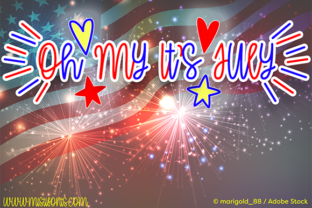
Oh My It’s July
A Script Font That Breathes — Not Just Performs
First glance at Oh My It’s July isn’t about technical specs — it’s about exhaling. This isn’t a frantic, over-looped script or a stiff calligraphic revival. It’s relaxed, slightly asymmetrical, and full of quiet confidence. The lowercase ‘g’ has a soft tail that curls just enough to feel intentional, not forced. The ‘a’ opens wide without collapsing into informality. And the spacing? Generous, but never empty — like breathing room built into the typeface itself. As a designer who’s tested hundreds of script fonts for client work, I can say this: Oh My It’s July lands somewhere between editorial elegance and handmade warmth — a rare middle ground most premium font designers chase but few hit.
Where It Lives Best (and Where It Doesn’t)
This is a display font first, last, and always. Don’t try to set body copy in it. But within its lane — short, evocative phrases — it thrives. In logo design, it works beautifully as a secondary wordmark or brand accent, especially for lifestyle brands, artisanal goods, wedding studios, or wellness labels. I recently used it on a small-batch candle packaging line: paired with a clean sans serif for product names and ingredients, Oh My It’s July carried the scent name — “Honey & Rain” — and instantly elevated the perceived value. No extra illustration needed.
For invitations and social media graphics, it shines in headlines and quotes — think Instagram carousels where a single line of text needs to pause the scroll. On merchandise like tote bags or ceramic mugs, it holds up well in screen-printed or foil-stamped applications, provided size stays above 24pt. In Canva templates and Cricut projects, it scales cleanly when exported as vectors — no jagged edges, no inconsistent stroke weight. And yes, it’s stable in web design headers when served via modern variable font stacks or properly optimized WOFF2 files.
But be precise: avoid using Oh My It’s July for navigation menus, pricing tables, or any UI element requiring quick scanning. Its charm lies in rhythm, not speed. It’s also not ideal for dense editorial design — think magazine spreads or blog posts with long paragraphs. Save it for pull quotes, section dividers, or chapter openers instead.
Readability Isn’t Binary — It’s Contextual
At 36pt on a matte-finish product label? Crisp and legible. At 14pt in a mobile ad banner? Unreadable — and that’s fine. This font trades universal utility for expressive clarity. That trade-off builds audience trust precisely because it signals intention: you’re not grabbing the first script font off a free site. You’re choosing mood, tone, and craft. When used consistently across brand identity — same weight, same tracking, same pairing logic — Oh My It’s July becomes a quiet signature. Not flashy, but unmistakably *yours*.
Pairing Is Where It Finds Its Voice
Script fonts live or die by their partners. With Oh My It’s July, contrast is key — but not chaos. I’ve found success pairing it with a sturdy, neutral sans serif (think Inter or Poppins) for balance, or a warm, low-contrast serif (like Lora or Adobe Garamond) for editorial depth. Avoid competing scripts or overly decorative handwritten fonts — they’ll muddy the hierarchy. A monoline sans beside it keeps focus on the script’s organic flow; a serif adds gravitas without stiffness.
One unexpected win: pairing it with a geometric display font for event posters. The tension between Oh My It’s July’s soft curves and sharp angles elsewhere creates visual energy — perfect for creative workshops or indie book launches. Just keep the script to one line, max two words. Let it breathe.
Designer Notes You’ll Actually Use
- Test it in black and white first. Some script fonts rely on color or texture to mask inconsistencies — Oh My It’s July doesn’t need that crutch.
- Check small-size readability on real mockups, not just your screen. Print a 12pt version on uncoated paper — does the ‘e’ close cleanly? Does the ‘r’ distinguish itself from the ‘n’?
- Compare uppercase vs. lowercase usage. The caps are elegant but less distinctive; the lowercase carries more personality. For logos, lean lowercase unless the brand name demands capital presence.
- Review letter spacing manually. Auto-kerning often over-corrects script fonts. In design apps, adjust tracking by ±5–10 units depending on context.
- Try it beside serif, sans serif, script, handwritten, and display fonts — not just once, but in actual layout blocks. Does it hold its own? Does it clarify or confuse the message?
- Confirm commercial licensing before client use. Oh My It’s July is a commercial font from Script Amp — verify usage rights cover your specific project scope (e.g., digital product resale, SaaS dashboard integration, or unlimited print runs).
Mood, Not Just Metrics
Typeface choice is never neutral. Every curve, every terminal, every space whispers something to the viewer — even if they don’t know typography terms. Oh My It’s July says: “Thoughtful, unhurried, human.” It doesn’t scream — it invites. That makes it powerful in saturated spaces like social media graphics or digital ads, where calm stands out. It also means it won’t suit aggressive tech startups or high-energy fitness brands — not because it’s weak, but because its voice is deliberately soft-spoken.
In packaging design, that softness reads as premium — especially when printed on textured stock or with subtle spot varnish. In printable design like greeting cards or planners, its natural flow supports emotional resonance without veering into cliché. And for bloggers and content creators building personal brands, it adds signature warmth without sacrificing professionalism.
Final Thought: Use It Like a Tool, Not a Trend
Oh My It’s July isn’t a shortcut to “pretty.” It’s a deliberate tool — one that rewards restraint, context awareness, and attention to detail. It won’t fix weak messaging or poor layout. But in the hands of a designer who understands modern typography, it deepens brand consistency, sharpens visual mood, and quietly lifts engagement — not through novelty, but through authenticity. If your next project needs warmth with weight, ease with intention, or elegance without pretense, this script font earns its place. Just remember: let it lead only when it has room to breathe.