Brandon: A Modern Brush Script That Earns Its Place in Real Branding
It was one of those quiet Tuesday mornings—coffee brewed, brand board open in Figma, and a new client brief sitting front and center: a small-batch ceramic studio launching its first collection. Hand-thrown mugs, earthy glazes, quiet craftsmanship. The vibe? Warm, intentional, quietly confident—not fussy, not flashy, but deeply human. I knew right away the logo needed breathing room, texture, and a little soul. That’s when I reached for Brandon.
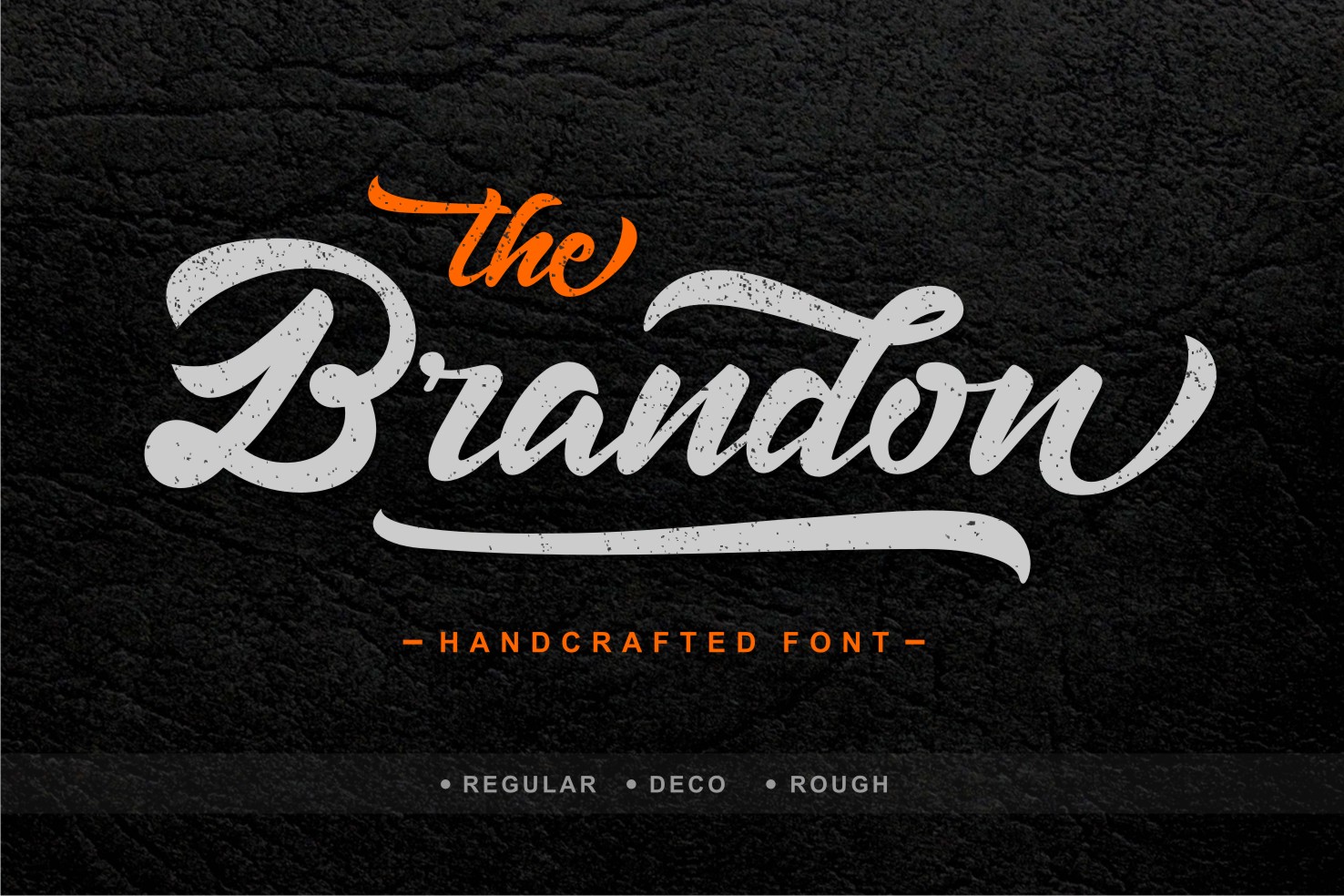
Brandon is a fresh, modern brush script—but it doesn’t feel like a trend-chasing novelty. It’s got rhythm, control, and just enough organic lift to avoid feeling stiff or over-polished. The strokes carry subtle pressure variation, like ink pulled confidently across paper—not too tight, not too loose. It’s the kind of script that reads as *designed*, not just drawn. And because it’s part of the Script Amp category, it arrives with real utility: swashes, stylistic alternates, ligatures, and multiple weights (though Brandon shines brightest as a display font). No guessing whether your “&” will connect gracefully—it just does.
I started simple: typing the studio’s name in all caps on a clean white artboard. Instantly, Brandon gave me hierarchy without shouting. The uppercase “S” has a graceful upward flick; the lowercase “a” tucks in with soft confidence. When I swapped in a swash alternate for the final letter, it didn’t scream “look at me”—it whispered intention. That’s the difference between decorative and purposeful typography.
In practice, Brandon works best where personality matters most: logos, letterhead, product labels, and social media headers. On a matte-finish business card? It holds weight and warmth. On a 4” x 6” product tag stitched onto a linen pouch? It feels hand-placed, not templated. And on an Instagram post announcing a new workshop series? It draws the eye without competing with the photography—because Brandon’s contrast and spacing let imagery breathe.
But here’s what I learned early: Brandon isn’t a body text font. Don’t try to set a full paragraph of website copy or a brochure description in it. It’s a headline-first, accent-driven script font—ideal for short-form impact. Think shop signage, packaging front panels, hero section headlines, or embroidered chest logos on aprons and tote bags. Its strength lies in how it shapes first impressions—not in long-haul readability.
For the ceramic studio, I paired Brandon with a warm, low-contrast serif—something with gentle bracketing and generous x-height, like Lora or Cormorant Garamond. Why? Because Brandon brings motion and voice; the serif grounds it with structure and timelessness. Together, they create balance: one says “crafted by hand,” the other says “made to last.” I avoided pairing it with geometric sans serifs unless used sparingly—for example, tiny caption text under a logo lockup. Too much neutrality next to Brandon’s warmth can mute its charm.
One practical tip I now build into every discovery call: test the font across three touchpoints before locking it in. I’ll mock up Brandon on a digital banner (checking legibility at smaller sizes), print it on a label sticker (to see how ink spreads on uncoated stock), and hold it up beside physical materials—like a clay sample or fabric swatch. Brandon’s swashes render cleanly at 24pt and above, but some alternates soften below 18pt on screen. Knowing that upfront saves revisions later.
The file package matters, too. Brandon comes in OTF and WOFF2 formats—so it’s ready for both print production and web use. I always verify multilingual support if the client serves bilingual communities (it handles basic Latin-1 well, including accented characters common in English, French, and Spanish). And yes—I double-check the commercial license. As a premium font, Brandon is licensed for unlimited projects, including merchandise and client deliverables. No hidden fees, no usage caps. That peace of mind lets me focus on design, not legalese.
Where Brandon really surprised me was in editorial moments. We added a small “Est. 2024” tag beneath the logo on their website footer—set in Brandon’s lightest weight, tracking slightly wider. It felt like a signature, not a footnote. Later, on a limited-run poster for their opening event, we used a dramatic swash “C” as a standalone graphic element behind translucent text. It wasn’t just typography—it became texture.
That’s the quiet power of a well-chosen display font: it extends beyond letters into mood, memory, and materiality. Brandon doesn’t try to be everything. It’s not a workhorse sans, nor a delicate handwritten font. It’s a focused tool—expressive but reliable, modern but never cold. It fits naturally into brand identity systems where authenticity and craft are non-negotiable.
If you’re building a visual language for a creative studio, local eatery, handmade shop, or wellness brand, ask yourself: does the typeface reflect how the brand *feels* to be around? Brandon answers that question with sincerity—not perfection, but presence. It’s the kind of creative font that earns trust before a single word is read.
And honestly? That’s rare.
- Use Brandon for logos, packaging front panels, apparel embroidery, and social media headers
- Avoid using it for body copy, dense UI labels, or ultra-small print applications
- Pair it thoughtfully—with warm serifs for balance, or minimalist sans serifs for contrast (sparingly)
- Always test swashes and alternates at intended sizes—especially on physical mockups
- Leverage its OTF and WOFF2 files across print, web, and digital templates without licensing concerns
Typography isn’t just about choosing letters—it’s about choosing tone, pacing, and presence. With Brandon, you’re not just picking a font. You’re selecting a voice that shows up with warmth, clarity, and quiet confidence. Exactly what good branding should do.